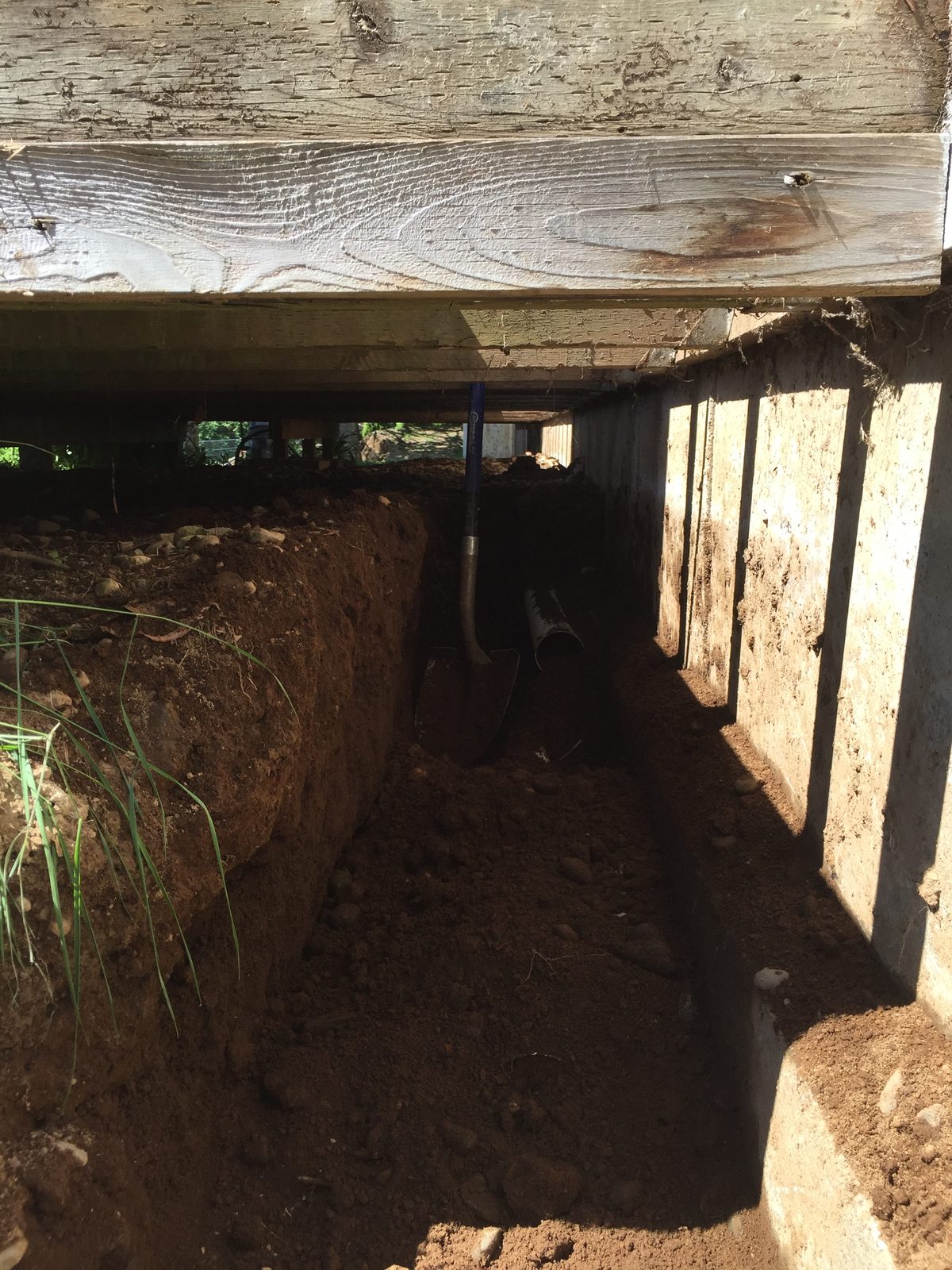
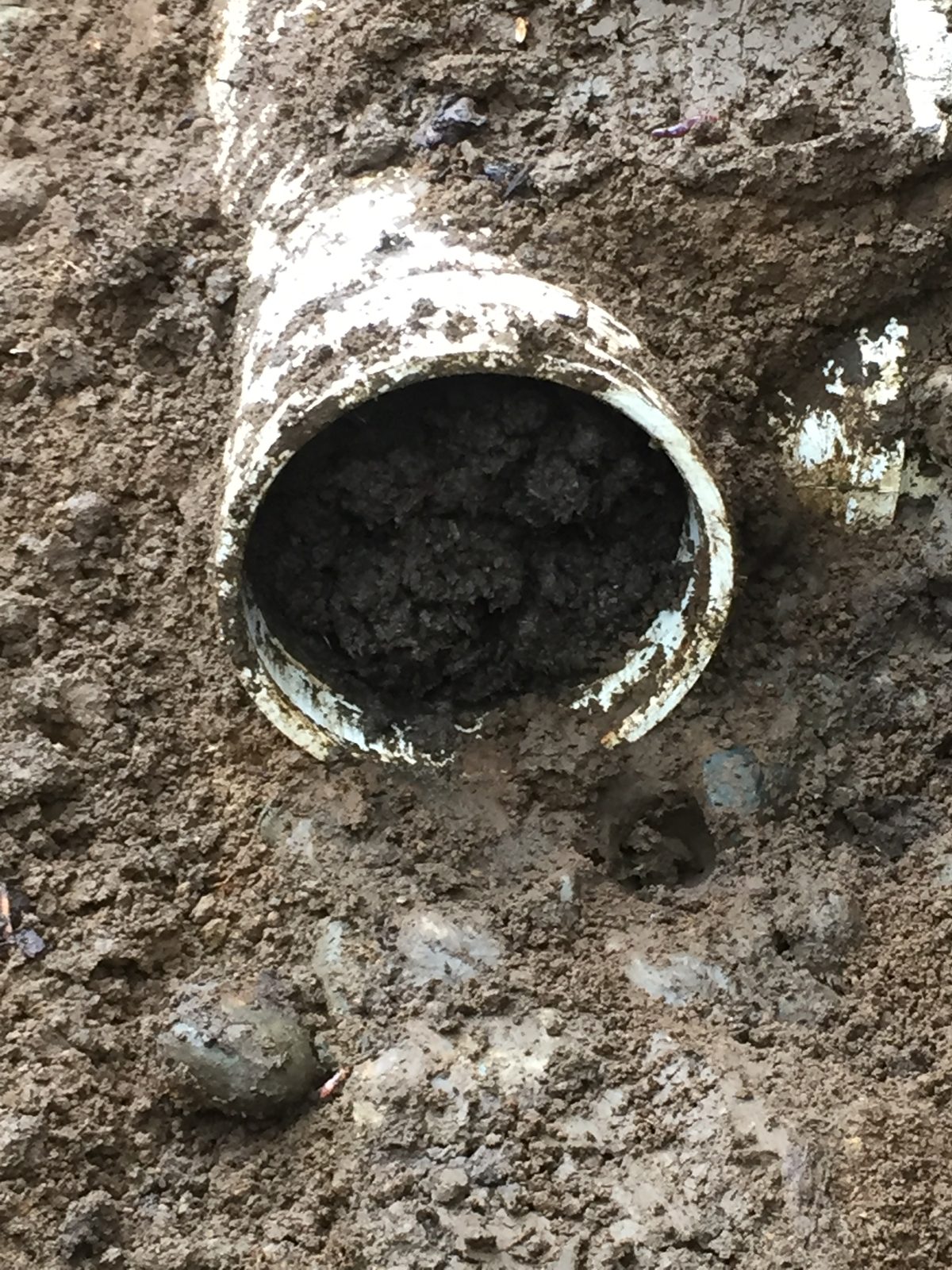
Wet crawlspace
A crawlspace that's damp in February and fine in August has a groundwater problem, not a ventilation problem.
What's actually happening
Water moving sideways on top of hardpan doesn't stop at your foundation. It goes under it. Once the ground around and under the house is saturated, moisture keeps rising into the crawlspace, whatever the vents are doing.
Vapour barriers and dehumidifiers treat the symptom, and they can be worth doing. But if water is still coming in, it's like mopping while the tap is still running.
Order matters: stop the water coming in first, then deal with what's left.
Do it the other way round and you pay twice.
What we'd look at
Where it gets in
Standing water, staining, and which way the ground under the house slopes.
The uphill side
This is almost always where the drain needs to go.
Existing footing drains
Whether there are any, and whether they still work.
Roof water
Downspouts that empty at the foundation are a common, cheap-to-fix cause.
The likely fix
In order of importance: a curtain drain on the uphill side, footing drains where they're missing or have failed, and tightlines to carry downspout water away from the house.